

There are so many reasons why I love to cook, besides the entire process itself just being so fun. It’s a hobby I can just slip into very naturally and I love making food for other people, specifically my family, my friends or my partner. There’s also just a unique joy to browsing cookbooks, trying a new recipe that sparks my imagination and exploring other cultures through food. Despite some of the more stressful moments, cooking will always be something very important and special to me.
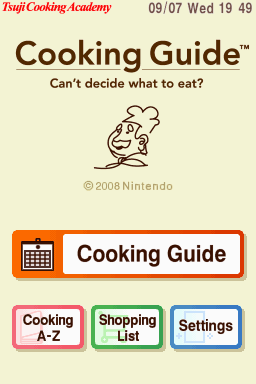
This is a big reason why I was so drawn to Cooking Guide: Can’t Decide What To Eat? for the Nintendo DS. Released in 2008 and developed by indieszero (who would go on to later develop the Theatrhythm series), Cooking Guide (also known as Personal Trainer: Cooking in the USA) isn’t really a game, rather it’s an application, a piece of alternative software, specifically a digital recipe book. With over 200 recipes available, each with origins from across the globe, Cooking Guide’s goal is to expand your culinary horizons and treat your taste buds to some truly delightful meals. And perhaps, you might just learn a thing or two about cooking along the way!
My first experience with the game was back during its initial release. I didn’t buy the game back then, but I remember seeing a review in the Official Nintendo Magazine, and individual recipes distributed through the Wii’s Nintendo Channel as a demo. Despite never actually using Cooking Guide until 2023, the memory of it stuck in my mind for a long time, the very concept of a DS cookbook poking away at my curiosity. Since finally giving it a shot, i’ve never looked back; Cooking Guide may not be a game but it is certainly a delightful piece of software that more people should pay attention to!
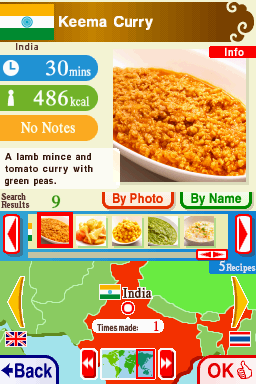
Obviously I can’t talk about Cooking Guide the same way I would talk about say, Sonic Advance or even Hotel Dusk. Instead I want to walk you through the entire Cooking Guide experience and that way we can talk a little more about what it does right and where it occasionally falters. So to start with, we of course need to choose a recipe and this is a place where Cooking Guide definitely excels. While writing this piece, my partner said that she was in the mood for a curry, which was a very good lead to get us started. Searching with the keyword ‘curry’ netted me 9 different recipes to choose from and from there, I personally picked out the ‘Keema Curry’.
Even if my partner hadn’t mentioned wanting curry, it’s exceptionally easy to browse Cooking Guide until you spot something that catches your eye, which is how I typically prefer to do it myself (I usually do just, enjoy browsing recipe books for fun anyway). You can view all the recipes alphabetically, by country, by specific ingredients or any number of specific requirements like how long it would take to make or even its calorie count. Of course, if you end up liking a recipe, you can always mark it as a favorite for later, so you can build up your own little repertoire of recipes for future reference! Cooking Guide’s selection really is quite varied too; certain countries and regions certainly do get a bit more love than others, but the options on offer serve as a great introduction to a whole new world of cuisine.
Now it’s time to take a look at our list of ingredients. You can adjust the serving size if you need to, and that will in turn adjust the amounts and weights on the list, which is a super helpful feature if you want to cook for yourself or if you’re cooking for your whole family or friend group. The ingredients list lets you check off what you already have, like a shopping list, which means that if you wanted to, you could take your DS with you to the shops, like I do, giving you a fool proof reference for what you’ll need for the recipe. For the curry, I luckily had most of the ingredients already, I just needed to go shopping for the spice, the meat and some ginger.
Certain items on the ingredients list, like a stock, or rice, link to other recipes if you’re unsure how to make them from scratch, an excellent addition if you’re a beginner, although it is a bit cumbersome to juggle two sets of recipes. Of course, there’s a full list of utensils that you’ll need for the dish as well, each of them labeled as ‘Essential’ or ‘Recommended’. Each ingredient or utensil listing has a description alongside it, which is helpful for some of the recipes that contain ingredients that aren’t widely available. For certain dishes, they do offer up potential substitutes as well; take the time I made Almond Tofu, where rather than using Agar Agar powder, they recommend using gelatin as a substitute which worked just fine.
So after buying all of the ingredients, it was now time to cook the actual meal. Cooking Guide smartly has both written instructions to follow, but also the helpful mascot ‘Chef’ will read the instructions out to you, so you don’t always have to look away while you’re, perhaps, chopping vegetables or stirring a sauce. The game also has voice control options as well, which allow you to move on to the next step without touching your DS. Although if you’re like me and enjoy having youtube videos playing in the background while you cook, then you might be better off switching the voice control option off, because it can be a little too responsive. That really is mostly a me problem.
During the cooking process, certain techniques are highlighted in red and allow you to ask for more info if you’re unsure about something. Meanwhile there’s a Cooking A-Z glossary as well that has pretty much all the info you’d ever need. This even includes a small selection of example videos that demonstrate technical cooking techniques, such as deveining prawns (something i’ve not had to do myself yet, so that may come in handy), finely chopping onions or kneading pizza dough. Cooking Guide really is stuffed to the brim with information and utilities that should hopefully aid anyone who is trying to learn how to cook, or even teach a new skill to someone with a little more experience. They even include a built-in kitchen timer, which allows you to play the Game & Watch title ‘Chef’ during the countdown, which is a fun little novelty.
There are a few minor issues however that could perhaps affect your experience with Cooking Guide. Sometimes I feel like the suggested cooking temperatures are a little too low. If the instructions say ‘low heat’ I often feel like I have to push it up to a ‘moderate heat’ instead. This might be down to a difference between the ovens or hobs though, which I could certainly understand. Also, whenever water is used as an ingredient in a dish, the suggested amount is always way too much in my opinion. I remember cooking the Chilli Con Carne recipe and the amount of water they suggested just seemed so excessive, it would basically be drowning the dish and you’d be waiting hours for the liquid to actually simmer off. With my Keema Curry I had a similar situation and made sure to reduce the water just a touch and it worked out alright.
Perhaps this is all down to personal bias though; the way I learned to cook simply conflicts with the instructions within Cooking Guide. And it’s easy enough to just alter things in the moment if I feel like something won’t work. I’m not saying I know better than Cooking Guide, but sometimes I do. Of course a newcomer is going to have a different experience, be that negative or positive. Honestly, outside of baking, recipes are meant to be flexible in nature anyway so its understandable that you have to meet it halfway at times.
I still think Cooking Guide is easy to work with and despite my fleeting issues, it succeeds in being a very user-friendly way to learn how to cook, thanks to the plethora of resources and easy to navigate UI. For someone with more experience Cooking Guide offers plenty of room to shift the rules around at your own discretion, plus offers you a huge variety of dishes to test your culinary skills on.
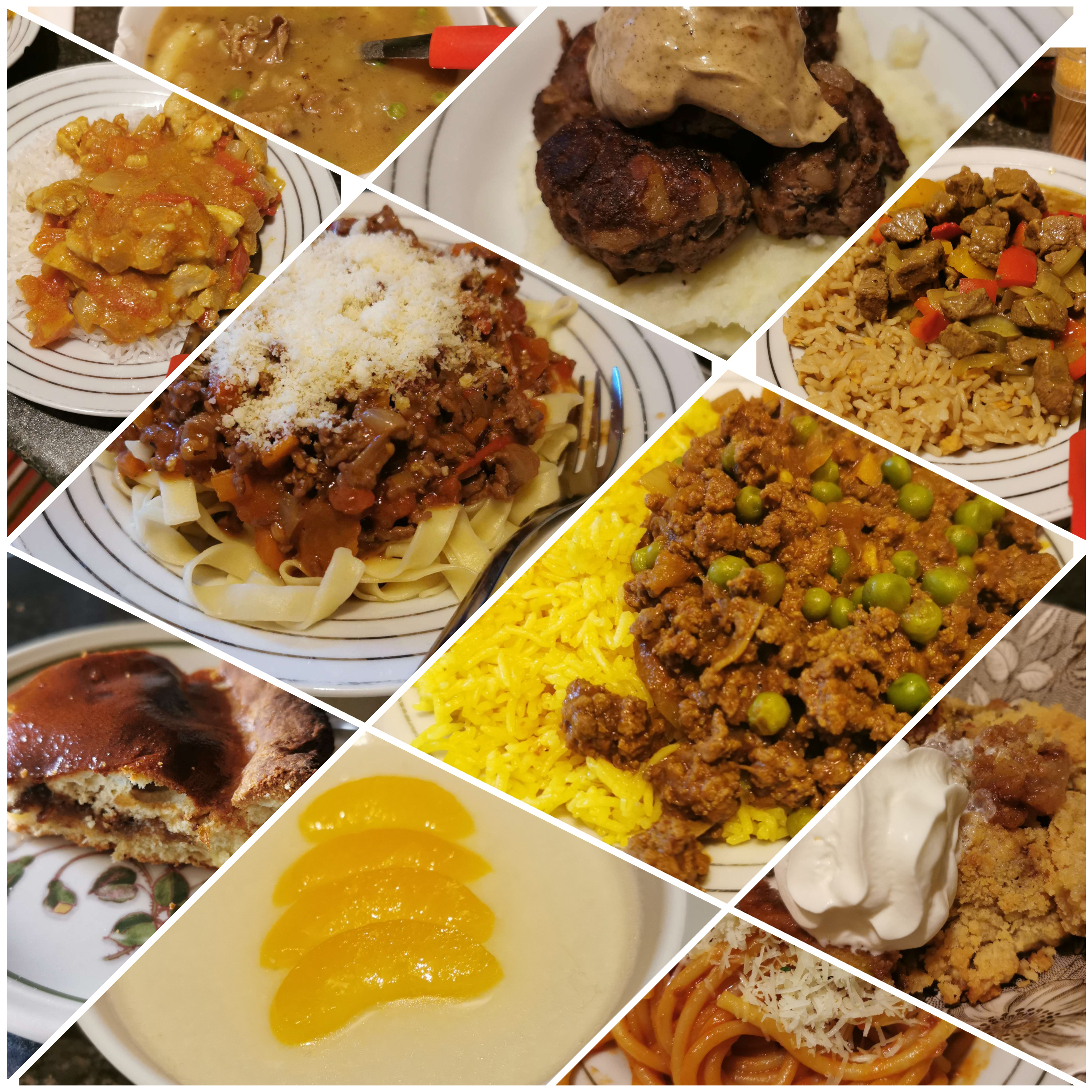
So I cooked my Keema Curry, along with some Tumeric Rice at Cooking Guide’s recommendation. The verdict? It was absolutely delicious, a wonderful, comforting dish with some wonderful flavor and aroma to it. Moreover I learned the best way to prepare rice is by frying it with butter for about a minute before cooking it in a stock. Seriously, that shit is magic, you should try it out if you get the opportunity. My partner loved it too, so mission accomplished in my eyes, Cooking Guide scores another win! Immediately afterwards, i’m browsing the recipes again, looking for what dish I might like to make next time. Hachis Parmentier is looking pretty good actually…
Cooking Guide was released at a time when Nintendo was really making a push to appeal to a broader audience with both the DS and the Wii. Games like Brain Training and Nintendogs were at the forefront of their marketing at the time, standing alongside Nintendo staples like Mario and Zelda in terms of relevance. Many of these games were even branded with the special Touch! Generations logo, to help them stand out even more to non-gamers. Regardless of how you feel about these games (i’m personally quite intrigued by all of them), or the marketing surrounding them, it was a hugely successful move for Nintendo at the time, helping the DS outsell the PSP by tapping into a market that Sony really wasn’t.
But nowadays, many of the games that were released during this era have mostly been forgotten about, or at least, it doesn’t seem like people are all that interested in talking about them, even Nintendo. Cooking Guide itself has largely lost its relevance or novelty, given how prevalent smart devices are now; countless recipes are literally at your fingertips at all times, as are countless tutorials and lifehacks that’ll help you improve your skills in the kitchen. I think that is a net positive ultimately, since great recipes should be accessible to anyone who wants them and the distribution of knowledge like that is a big reason why the internet is so wonderful. Even back when it was released, Cooking Guide was honestly a pretty expensive prospect when you could buy a regular cookbook for way less, so i’m not actually sure how many actually gave it a fair shot or even still use it today.
But at the same time, Cooking Guide doesn’t deserve to be forgotten, since it really is peak DS era Nintendo, a digital cookbook that you can pop in moments after a few hours of Metroid Prime Hunters. I often enjoy cooking from books more than I enjoy cooking from the internet, it is just very engaging to me in a way online recipes cannot match, and I get that same feeling of engagement when I use Cooking Guide. Not only is it such a novel little piece of software, one that charms with its animated menus, fitting musical accompaniments and its charismatic mascot, the vibes are just so wholesome and comfortable.
Perhaps it’s simply down to nostalgia, for a bygone era of gaming, one that I grew up in. Maybe it is just the novelty of it all that entertains me and keeps me coming back, time and time again. The permanence, the physicality of Cooking Guide could also be a factor; like a traditional cookbook, Cooking Guide is something detached from the online world, each of the recipes were curated and chosen for a reason and there’s something reliable and reassuring about that. Whatever the reason is, it brings me such a feeling of pure joy and satisfaction to follow the recipes held within that little DS cart. It’s your passport to a culinary journey across the continents and it’s small enough to sit in the palm of your hand.
This wasn’t even the only time a recipe book was made for the DS; Cooking Guide is actually a sequel to a japanese only release called Shaberu! DS Oryōri Navi. Along with Cooking Guide, there was the American-only follow-up America’s Test Kitchen: Let’s Get Cooking, and three Japan-only sequels, Kenkou Ouen Recipe 1000: DS Kondate Zenshuu, Shaberu! DS Oryōri Navi: Marugoto Teikoku Hotel and Kantan! Tanoshii! Okashi Navi DS. Europe also got 1000 Cooking Recipes from ELLE à table, from a different developer. And lastly, there is What’s Cooking? with Jamie Oliver, but I earnestly wouldn’t be surprised if there were other, more obscure cookbook releases hidden somewhere within the vast DS library.
Regardless, I think Cooking Guide is something that everyone should try at least once, especially if you have a vested interest in DS era Nintendo titles. Unsurprisingly, it is rather inexpensive, you can pick it up for less than a fiver here in the UK, even then there are many other ways i’m sure you could acquire it if you look hard enough. Whether you’re a more seasoned chef, or if you’re just starting out, it genuinely has something for you. Even if you do just try it out for the novelty of it all, I think even that would convey just a little bit of why I am so fond of it.
Thank you for reading! In Retrospect is where I talk about games that I find interesting, for one reason or another. It means a lot that you took the time to check out what I have to say. If you’re interested in supporting my work, then i’d appreciate a follow on my Bluesky.
I also have a Kofi, so if you also want to support me, you can do so that way also!






 YunaNoire