

Back in October last year, I published an article about Sonic Advance, the first original Sonic title after Sega stepped away from the console market. Given its place as a cherished game from my childhood, I was always going to approach it with a more positive outlook than most; I can’t tell you how many times I’ve played through that game or how much joy it has brought me since I unwrapped my copy on that fateful Christmas morning. Despite any flaws it might have when I separate it from my nostalgia, I earnestly believe it holds up incredibly well and it easily keeps pace with the original 16-bit trilogy.
Of course, Sonic Advance was just the beginning and almost immediately Sega set to work on a sequel. Using a modified version of the original engine, Dimps and Sonic Team released Sonic Advance 2 almost exactly a year later. The development team set out to make a game that was even faster than the original in every respect and while the first Sonic Advance felt like a merging of Sonic’s earliest games and the Adventure era, Sonic Advance 2 has its own identity in terms of gameplay and aesthetics, for better and for worse.
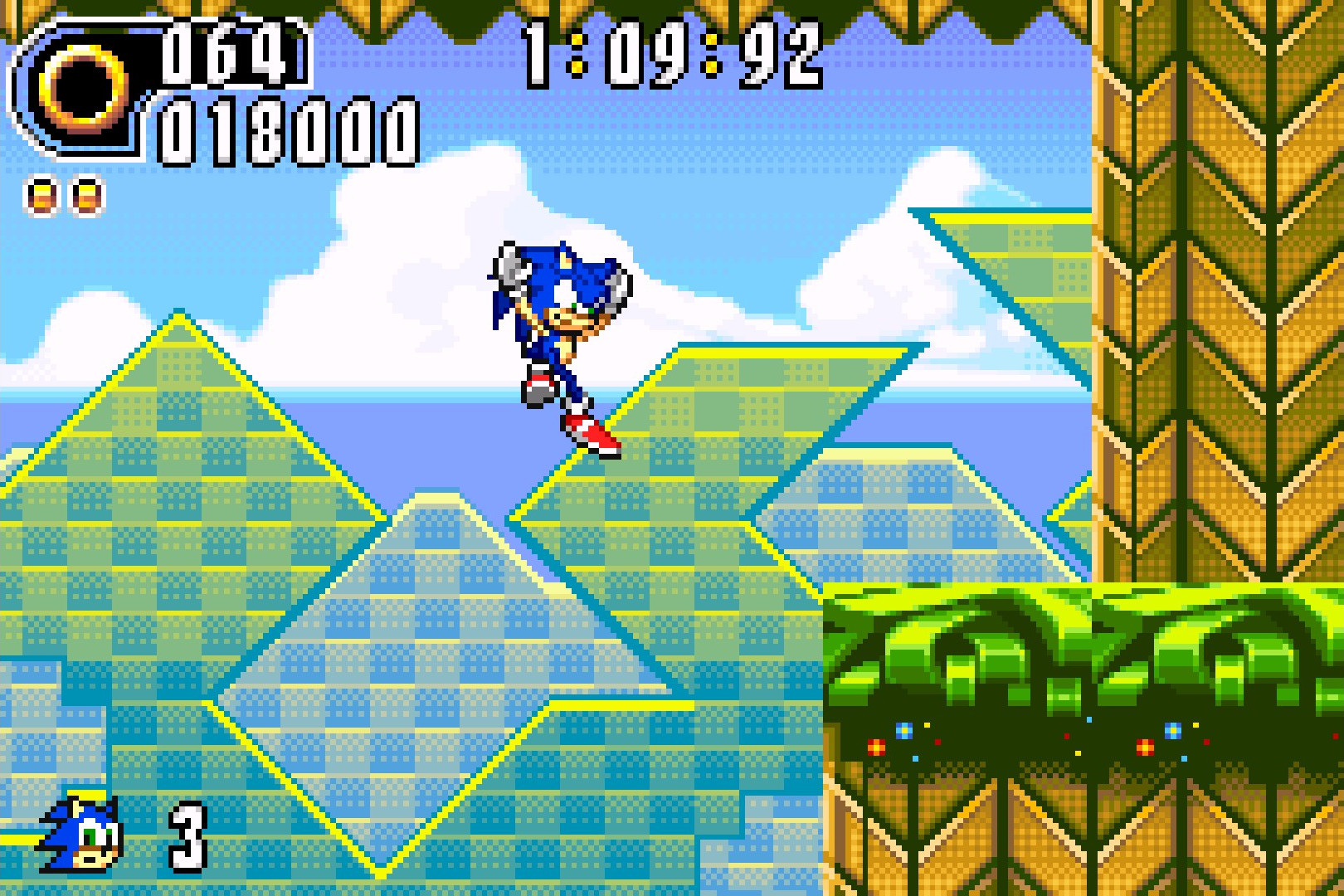
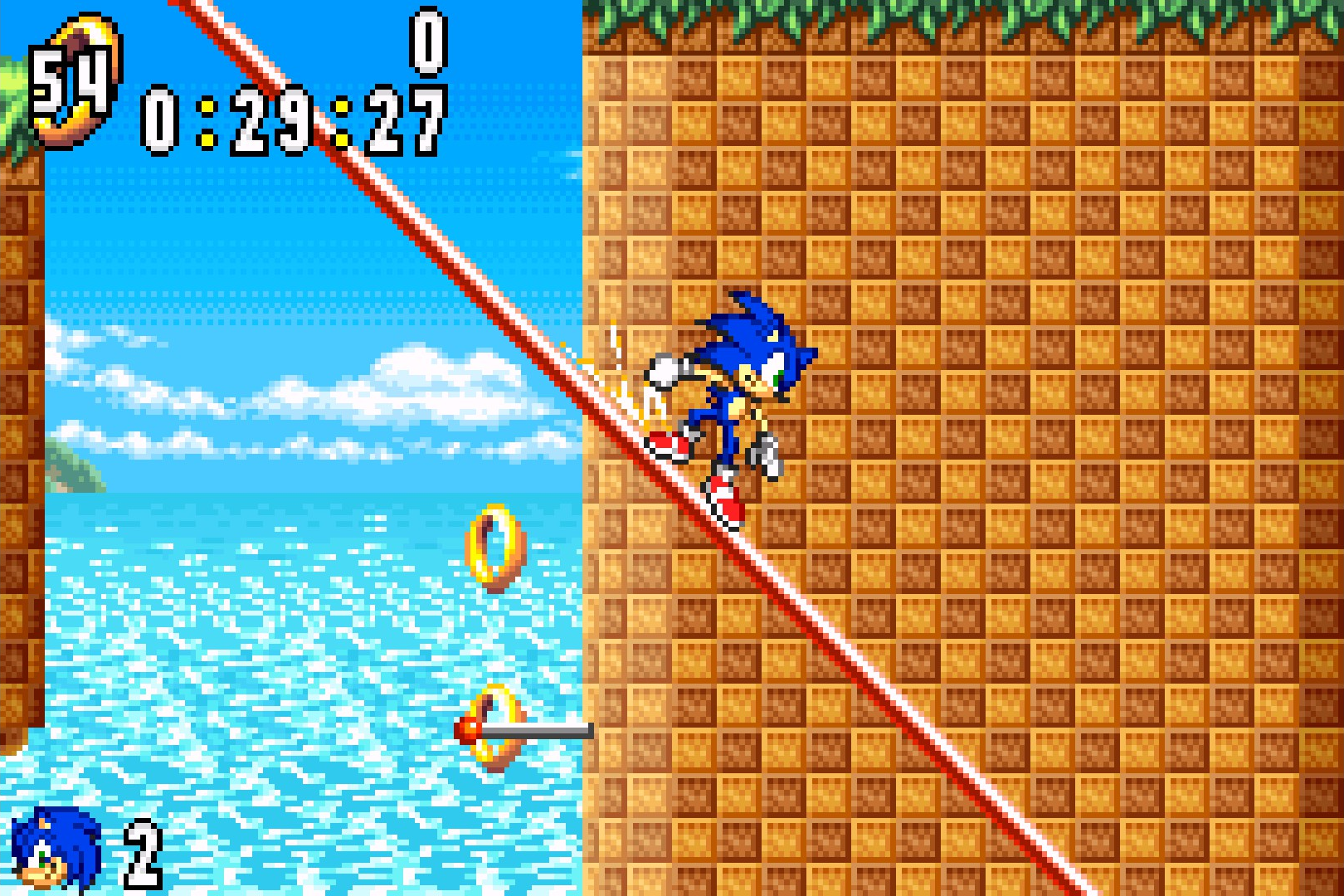
At a glance, the structure hasn’t changed that much; run, jump and spin dash through colourful zones and acts until you reach the end. However, as mentioned previously, the focus on speed here has been amped up tenfold; at the start of each act, your chosen character finds themself on a starting block, as if in a race, and whenever they reach a certain speed, they enter into a ‘Boost Mode’, which increases their velocity even further! Levels are much larger than before to accommodate for this extra speed, which is a good thing, otherwise stages would likely be over in just the blink of an eye.
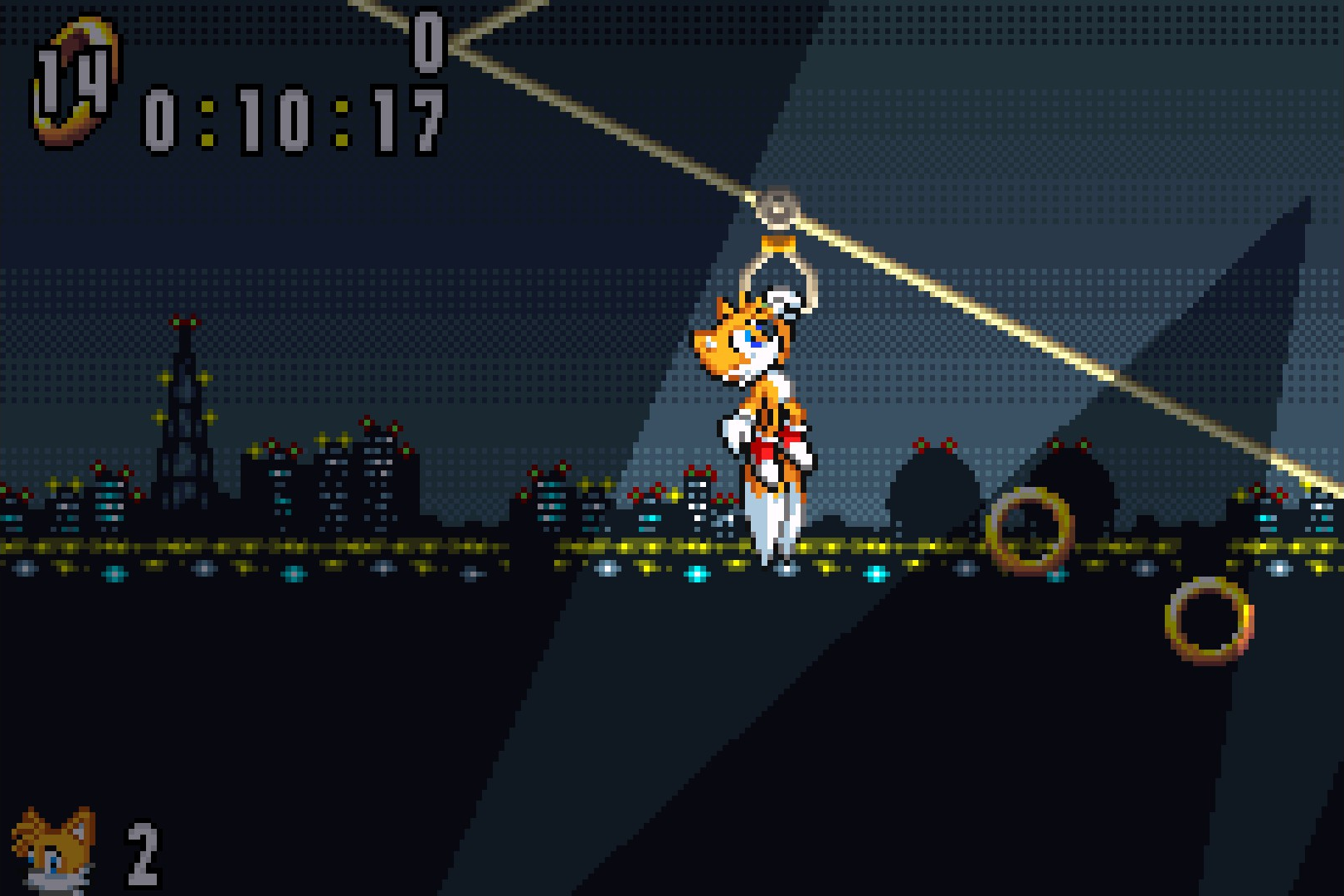
This thrilling, dynamic sense of speed feels incredible and is a definite highlight of the game; keeping your flow going just feels so cool, slick and satisfying, better than any Sonic game before it in my mind. The additional movement techniques that Sonic & co. have (some of which are making their return from Sonic Advance) really enhance this too, as you can utilize them to keep yourself on the right track, if you know where to use them, or if you just trust your instincts from time to time. Grind rails have opened up to all characters now too and feature heavily. This kind of invigorating gameplay is felt strongest during the early zones and is where Sonic Advance 2 is at its very best. You truly feel like you are the fastest thing alive.
But unfortunately, things do start to get a little shaky once you hit Zone 4. To put it bluntly, the game has a bit of a problem with its level design. Early stages are pretty easy, some could even say too easy. But stages like Sky Canyon or Techno Base can get a bit insidious, with stage hazards that sit on the wrong side of challenging and are more like pranks set up by Dimps. So many moments will have you running headlong, at incredible speeds, into hazards that kill you instantly with little to no time to react. Many critics of the Advance games commonly bring up death pits and while I’d argue Sonic Advance 1 doesn’t really indulge in this design element as much, Sonic Advance 2 definitely does and it gets more than a little bothersome.
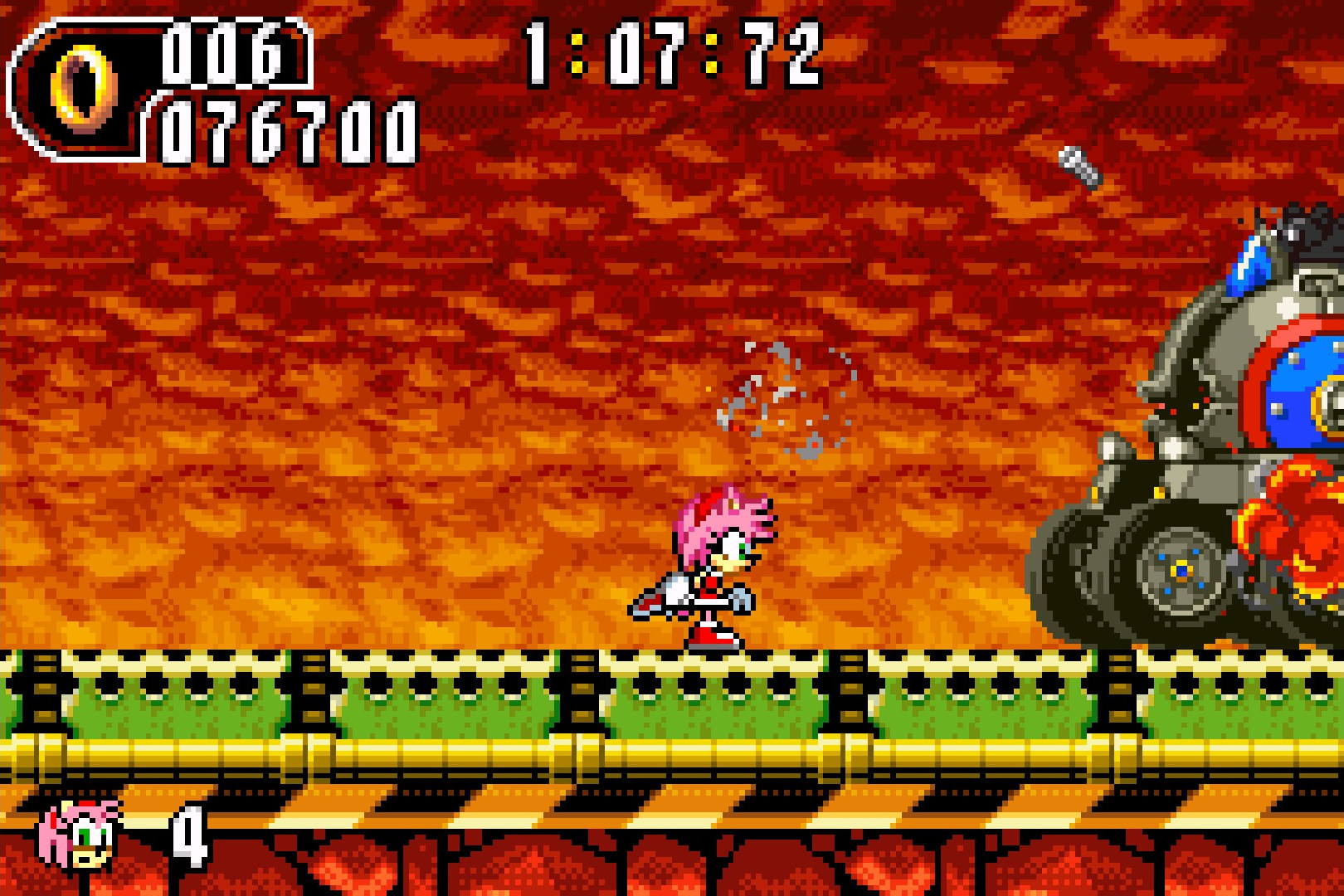
This doesn’t make Sonic Advance 2 impossible to beat, just frustrating in the wrong ways. The boss stages only seek to enhance this frustration as well; each boss is now an auto-runner stage, which sees you struggling against the tide just for the opportunity to land a hit on Eggman. Much like the levels themselves, these aren’t too bad at first, but get really annoying later on, mostly because of their auto-running nature and some really irritating design choices (instant death slaps from a giant robot hand for example). This assumes of course that you aren’t playing the game as Sonic series newcomer Cream the Rabbit, who absolutely demolishes the bosses thanks to her ability to launch Cheese the Chao into the face of a poor, unsuspecting scientist.
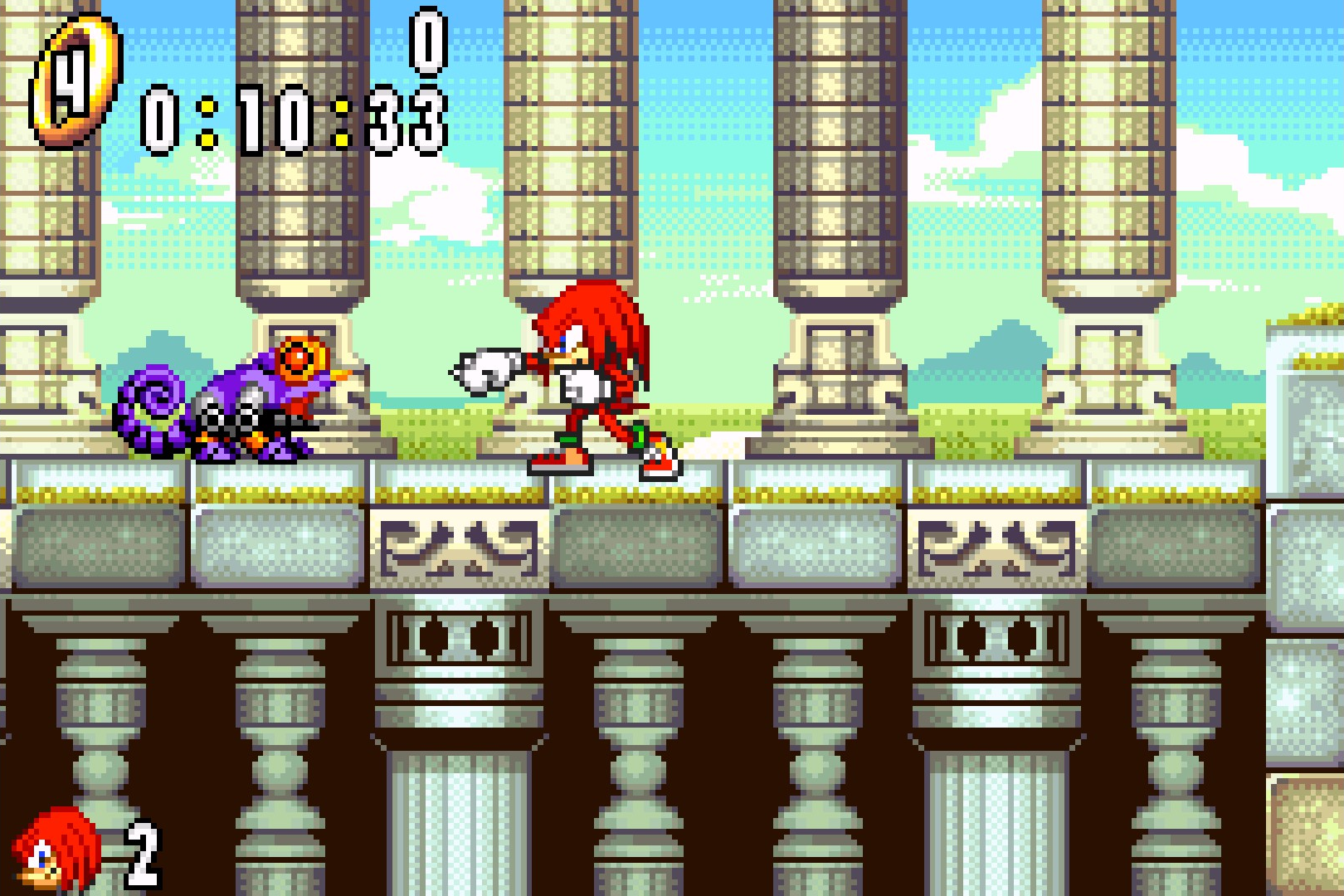
Cream was added to the game as sort of easy mode and growing up, she was actually the only character I managed to beat this game as, purely for her ability to decimate bosses without very little difficulty. Her ability to fly certainly helps when avoiding certain death from pits too in normal gameplay, although Knuckles and Tails have this advantage also. Trying to finish Sonic Advance 2 as Sonic the Hedgehog himself is genuinely a lot harder than it should ever have needed to be. It is very peculiar and it makes Sonic Advance 2 a bit of a weird duck when it comes to recommending it.

Even more egregious in terms of difficulty, is what you’re required to do to collect the Chaos emeralds. Each stage has seven rings you need to collect in a single run just to enter the Special Stage. With Tails and Cream, this is made easier by their ability to fly. Knuckles is a little more challenging, but still doable thanks to his gliding and climbing. Sonic though requires insane amounts of restarts and you might even find yourself having to look up stage maps just to chart an ideal course. You might wonder too why I didn’t mention Amy, and that’s because in order to play as Amy at all, you have to collect all of the emeralds with every single character. Absolute madness. If I don’t stop myself now I will talk about this one element for an entire article.
I don’t want to give off the impression that I dislike this game however because that is far from the truth. As replete with frustrations as it is, I adore how this game feels to play when it isn’t pulling the rug out from underneath you. It does suffer from being a bit simple and I feel like it is totally justified when people say that you just have to hold right to win in the early game. In Sonic Advance 1, level design felt a little bit more thoughtful, but that game wasn’t being made with the same sense of speed in mind. It is clear that they were trying to push in a new direction here, and it is something I really do applaud them for. I understand that I am somewhat biased though, having grown up with this game, having had a lifetime to get accustomed to its core mechanics.

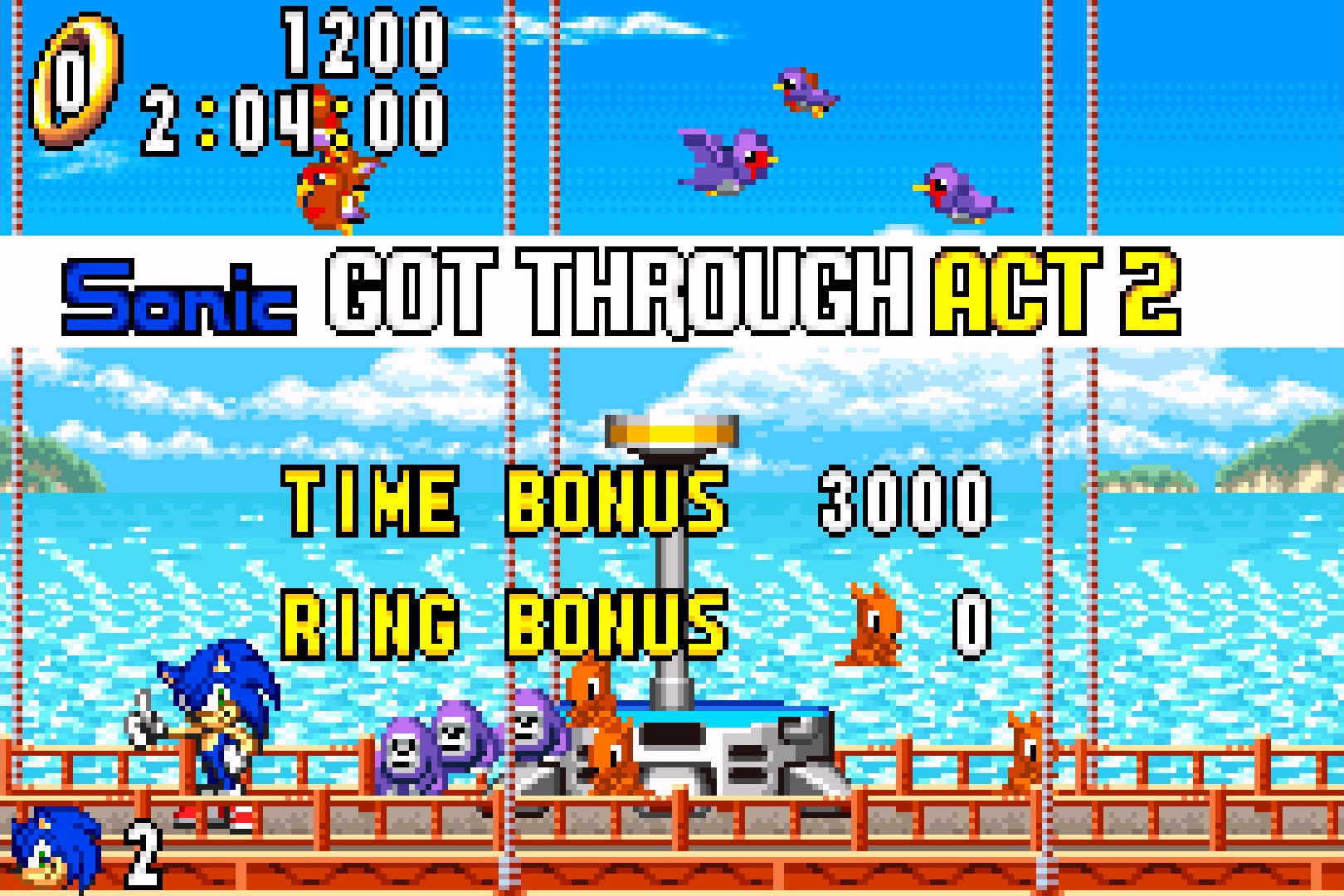
Where this game definitely improves upon its predecessor however, is the visuals; it was already building off of the strong foundation built up by the original game of course, but Sonic Advance 2 completely kills it when it comes to visuals. The amazing character sprites are back and they honestly look even better now, with even more charm and expressiveness than before. It’s absolutely no wonder that these sprites would become the building blocks for so many flash animations, webcomics and original characters back in the 2000s. I remember my first attempt at creating a Sonic OC from these sprites… he was a grey Sonic called Demon Sonic… I was probably about ten or twelve!
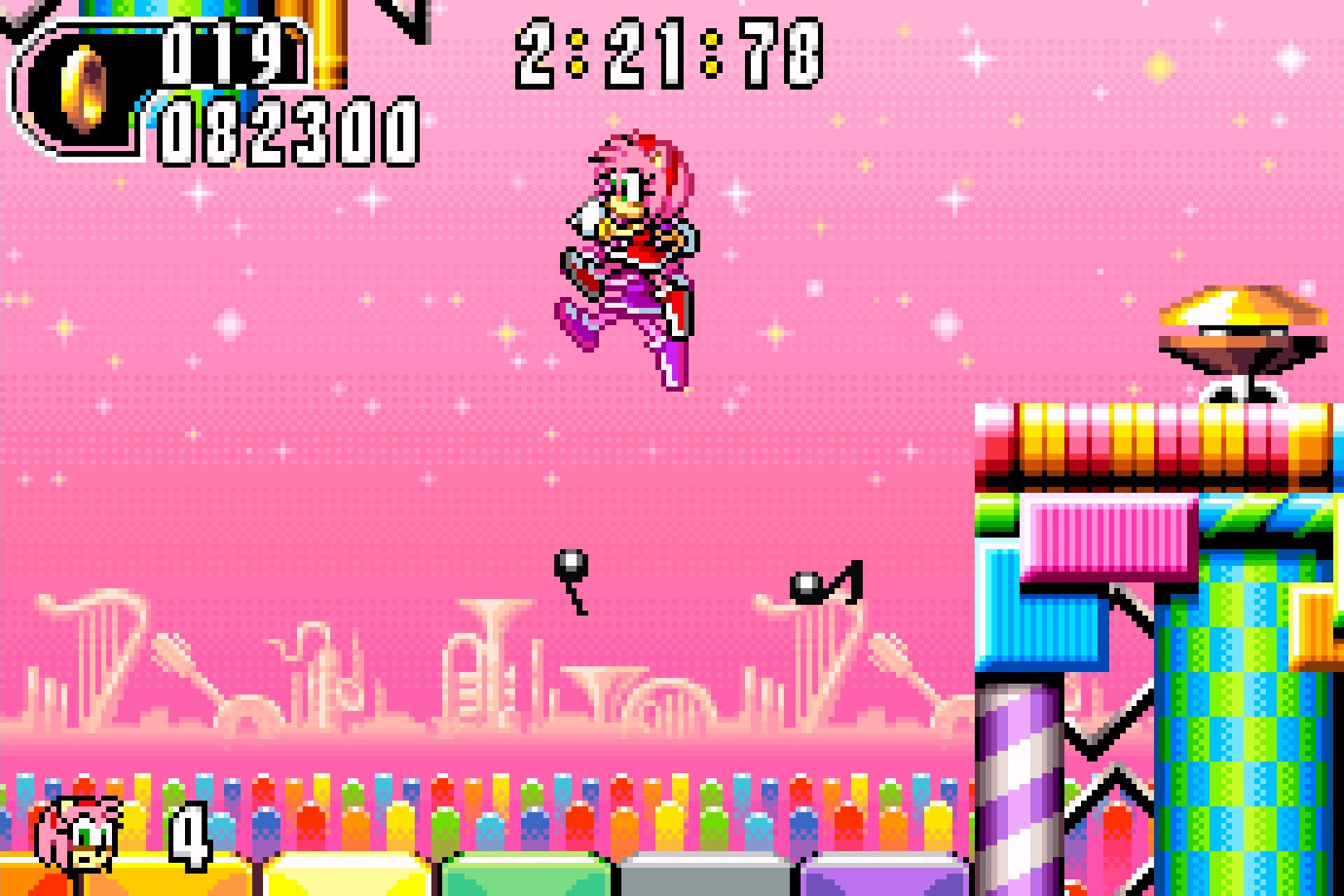
Just as stunning though are the levels themselves; Sonic Advance 1 played it pretty safe with its level themes, but Sonic Advance 2 has some of the most colourful and creative levels in a Sonic game i’ve ever seen. Stages like Music Plant and Ice Paradise are dazzling, and even the more maligned levels like Sky Canyon and Techno Base have their charms thanks to unique obstacles that feel well tailored to each Zone. There’s much more of a distinct style to them, lots of angular, mechanical, industrial lines. It feels distinctly 2000s as a result of this and aligns so nicely with this era of Sonic. When I think about aesthetics of the Sonic Advance trilogy, I’m almost always going to think about Advance 2 over Advance 1.
And of course, the music is as great as you can expect and then some! It contains some of the best music in the franchise, with every stage having a new upbeat tune that’ll be stuck in your brain for a lifetime after you’ve listened to it. Much like the visuals, it has much more of an identity when compared to Sonic Advance 1, a personality of its very own. Music Plant is of course a highlight in this regard, but to me Techno Base and Ice Paradise are strong contenders in their own right.
I’ve done my best to seperate myself from my nostalgia in this article, to the point that in preparation for writing this, I asked on Bluesky what other people thought about this game. I also took a look at reviews on Backloggd, just to gauge what the general consensus was, as it has always been hard for me to do so. Despite my own love for Sonic Advance 2 I always assumed people leaned towards viewing this game in a negative light. But I saw plenty of people espouse their own adoration for this game despite its flaws. Many people were critical too, but seemed to agree that some frustrations were a result of the small screen size of the GBA.
Again, I did all this to paint a better picture in my mind regarding how people feel about this game overall, but also to try and decide how I personally felt about the game as well. While I can confidently say that I love this game and always have, my feelings on it have always been a bit more complicated. For a while I treated it like a bit of an awkward middle child in my mind, mostly because of its few foibles. I was content to put it as a comfortable third place in the Sonic Advance trilogy, with my feelings for Sonic Advance and Sonic Advance 3 being that much more powerful.
But I think it deserves better than that; Sonic Advance 2 is a great game, it is a great Sonic game. It sits amongst its siblings as a fantastic platformer on the GBA and it sought to do more with Sonic than just rest on what was built up in Sonic Advance. Dimps and Sonic Team set out to make one of the fastest Sonic games ever and they really did reach their goal for what it’s worth. Design issues and all, I love Sonic Advance 2, it’s a blindingly fast burst of adrenaline, that challenges you to think as fast as the blue blur himself. I completely understand, and in some places concur, with the detractors, the critiques, but it doesn’t dampen any of the thrills.
Thank you for reading! In Retrospect is where I talk about games that I find interesting, for one reason or another. It means a lot that you took the time to check out what I have to say. If you’re interested in supporting my work, then i’d appreciate a follow on my Bluesky.
I also have a Kofi so if you also want to support me, you can do so that way also!


 YunaNoire