
Sonic The Hedgehog’s New Handheld Legacy
To say that 2001 was a curious time to be a Sonic fan would be an understatement. Most of us familiar with Sega know the story very well; rather than accruing further losses in the console market, the once thriving company decided to divert its attention towards being a third party developer and publisher. This of course left the doors open for them to bring their beloved franchises to systems made by their erstwhile competitor, Nintendo. While many of their IP would find their way onto the newly released Gamecube and Game Boy Advance during the 2000s, it made sense to have their most iconic character be one of the first.
Enter, Sonic Advance. Released alongside Sonic Adventure 2: Battle, Sonic Advance holds the distinction of being the first original Sonic game to be released on a Nintendo system and it serves as a bit of a merging between the classic era and the, at the time, modern era of Sonic. Given the game was set to be released for Sonic’s tenth anniversary, it makes sense to take him back to his roots while also bridging the gap with his Sonic Adventure redesign. What this union results in is perhaps one of the finest platformers on the system, both for the time and in retrospect.
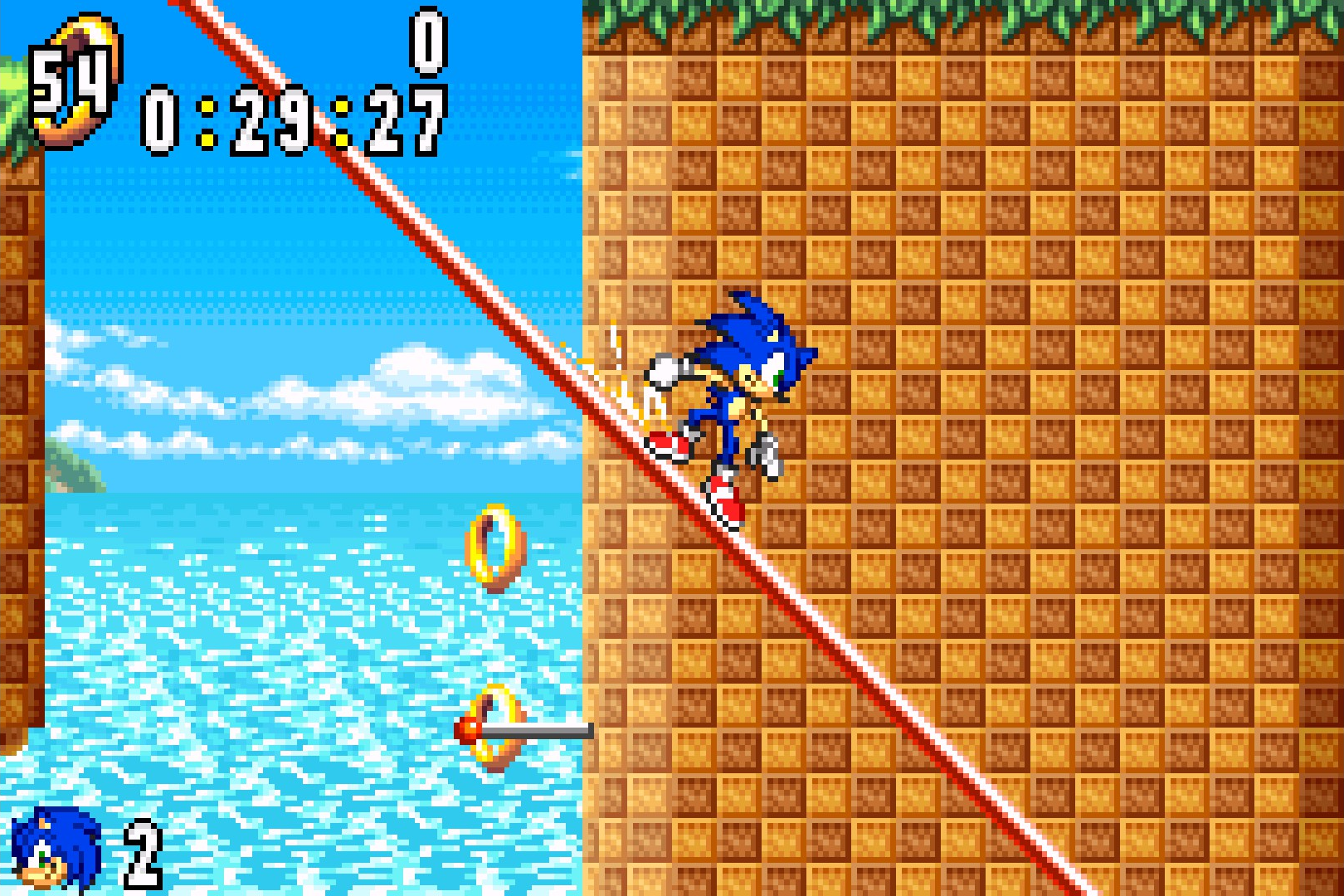
Sonic Advance mostly follows the same structure and gameplay laid out by its Mega Drive forebears. Across several zones, each with two acts, you speed along as either Sonic, Tails, Knuckles or Amy Rose. If you’ve played a Sonic game before, everything seems pretty familiar right out of the gate, and they do a wonderful job and the physics are a good approximation of those classic games as well. Controls are tight and momentum works the way you would expect. Members of Dimps, the developers, had previously cut their teeth on Sonic Pocket Adventure for the Neo Geo Pocket Color, so by this point they already had experience with Sega’s beloved speedster.
Adding an extra layer to the experience though is the enhanced movesets that have been given to each of the characters. While Sonic, Tails and Knuckles have moves previously seen in their classic outings, they each have new moves as well, mostly for movement, but they each have unique attacks as well, such as a slide move for Sonic. The movement techniques are the real star though, allowing you to speed through levels in new ways so long as you know how to perform them. Amy in particular, who plays much differently to the other three, pushes you to approach obstacles in a whole new way. She doesn’t have the spindash for example, so you have to apply some more vertical maneuvers to get up slopes or hills if you don’t have the required speed.
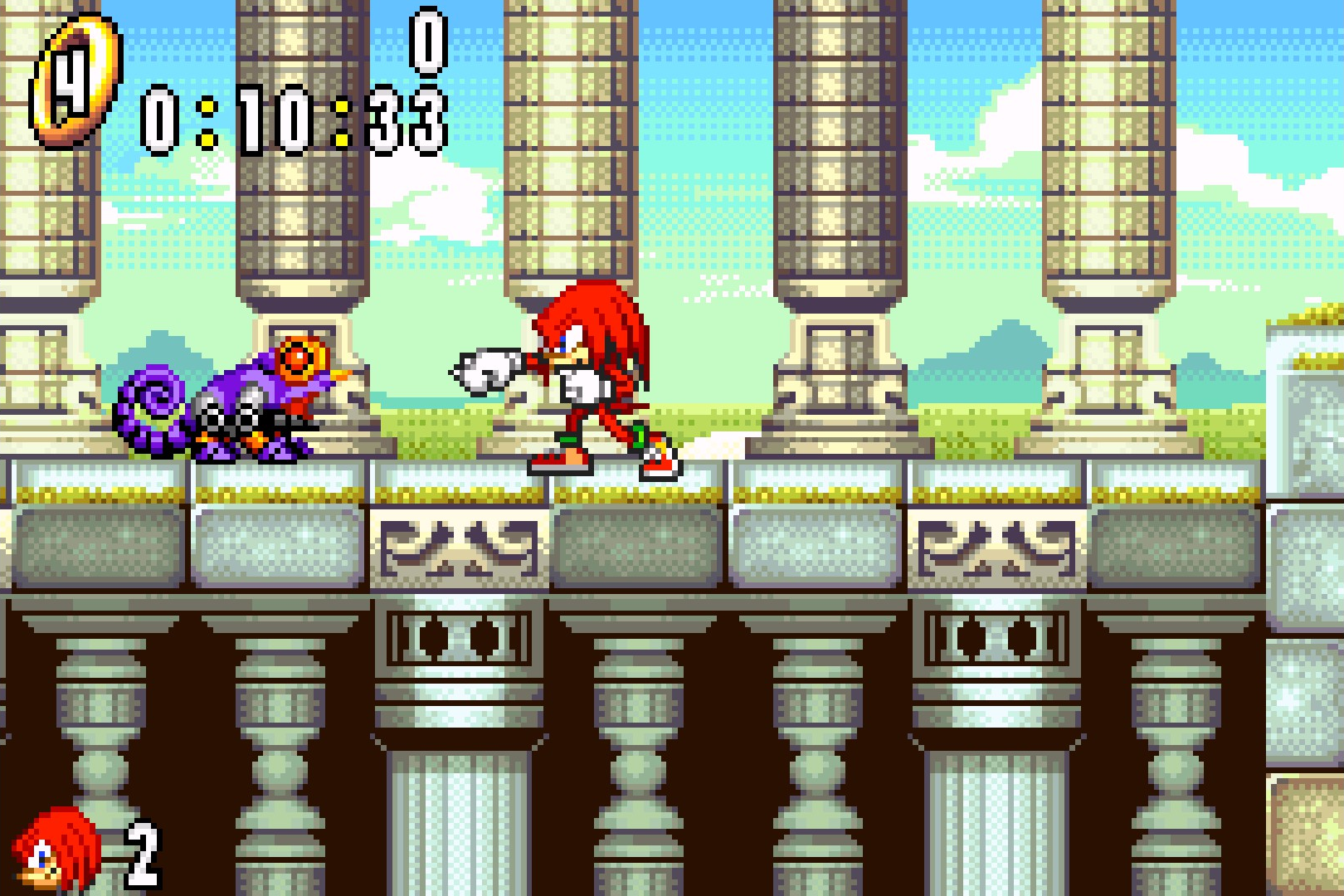
Tails and Knuckles are more limited in their new options, given their returning flight and glide abilities are already useful for a variety of situations. They do both get the ability to swim, which is a great tool for the more waterlogged stages in the game, and while that is admittedly very situational, the sheer utility of their other tech more than makese up for it. Stages don’t really become trivialised by their superior aerial maneuvers, but they do allow you to save yourself from traps and pitfalls with greater frequency (plus they also make searching for certain special stages a lot easier).
You can play this game without engaging with most of these new tools, but in repeat playthroughs they can be fun to mess around with to see what you can do with them. These moves would be expanded later on in the trilogy and here they are in a primordial form, but their simplicity is still executed excellently.
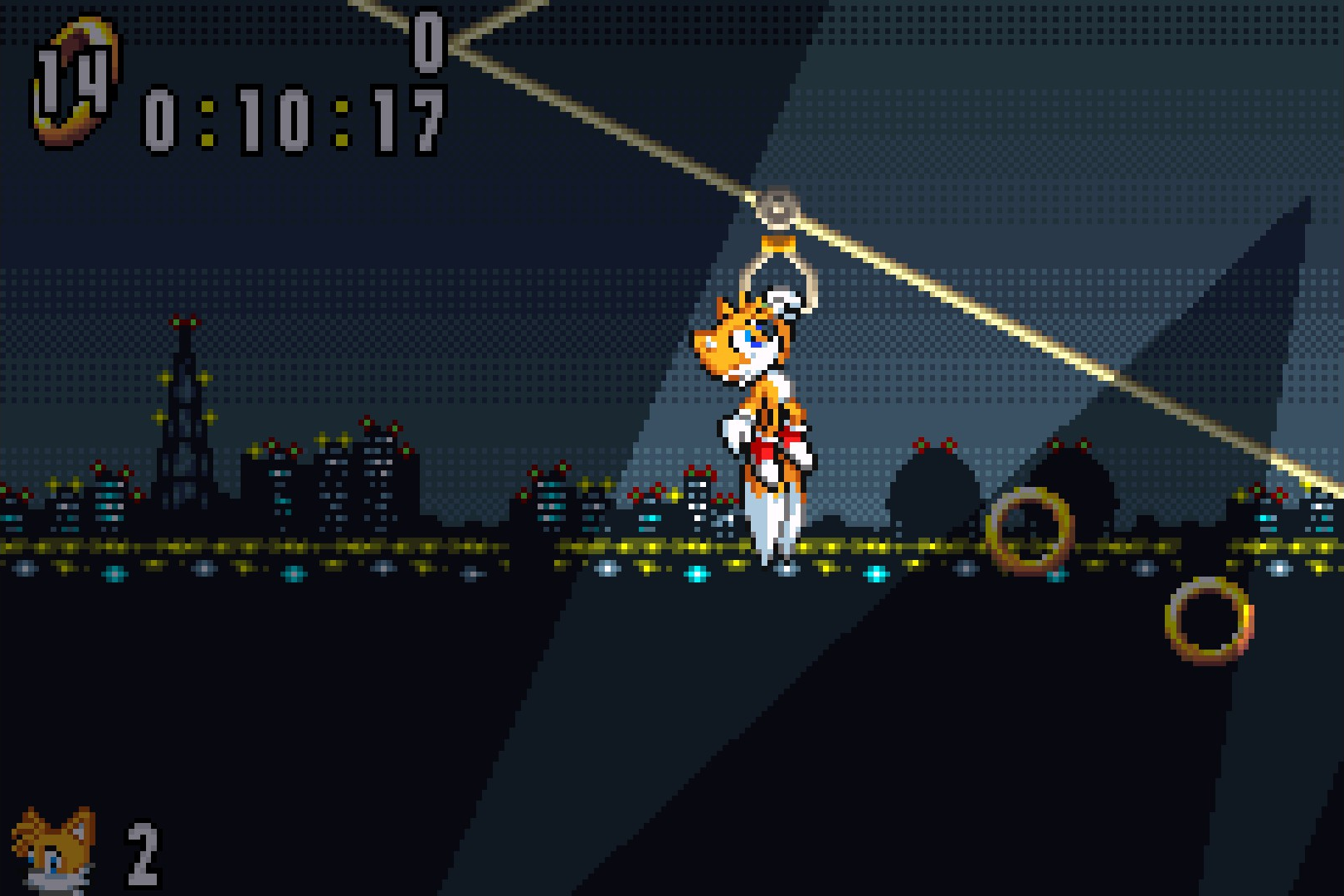
The levels make up one of the weaker aspects of the game though, at least for my personal taste. On a technical level, they are largely well designed and visually, they are stunning to look at. Detailed and colorful pixel art makes Sonic Advance one of the best looking GBA games, even to this day, they just lack a little in the theming. This isn’t necessarily a bad thing, but they just feel somewhat lacking if you take the rest of the trilogy into consideration as well, as Dimps later found a much more unique and memorable style for the Advance series to call its own.
The OST is no slouch either, although the rest of the trilogy does tend to overpace it in this regard too. You still have some incredibly memorable songs though, each of them showing just what the GBA can do in terms of audio, even in its first year. And the crown jewel in terms of presentation has to be the character sprites themselves. There is so much personality to find here and each character is animated in a way that oozes quality and charm. So much love and care was put in to make sure these iconic characters were just as full of energy and charisma as their three dimensional counterparts. Ever since I first played this game, Sonic Advance has been at the peak in terms of style for 2D Sonic games, outmatched only by the rest of the trilogy.
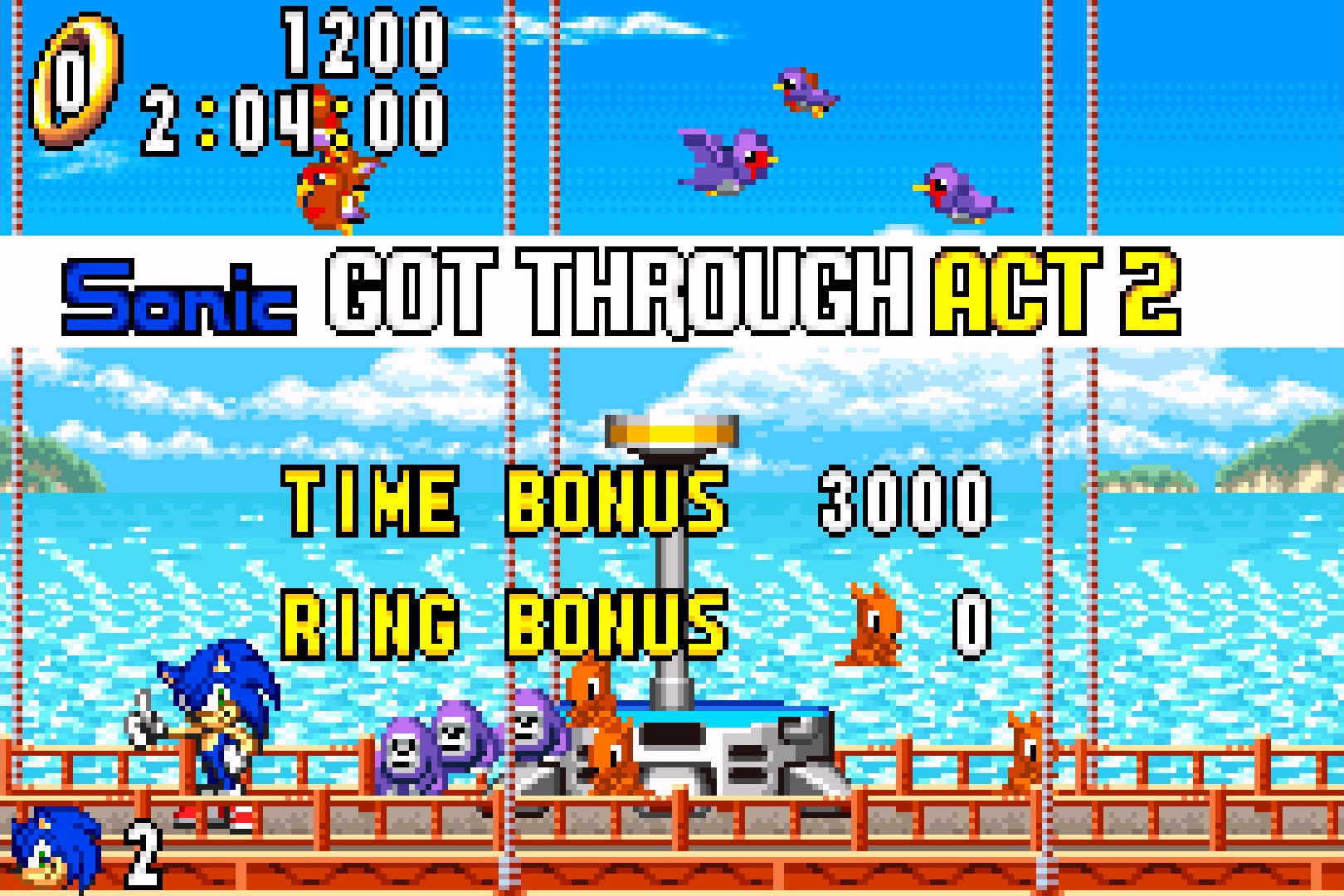
To me, Sonic Advance stands out today as a classic. But I am admittedly a little biased; to be forthcoming with you all, this was the first Sonic game I ever owned and it was also my first Game Boy Advance game. I’ve probably played this game more than any other in my life and it took my budding love for Sonic games and made it blossom, turning me into the diehard fan I am today. But rationally, and separating all of that, I still believe that it deserves to be seen as one of the best platformers on the system, surpassing all of Mario’s efforts. Mario platformers played it rather safe during the GBA era in my opinion, while Sonic chose to do something that paid homage to days gone by, while still seeking new horizons.
Sonic Advance definitely is antiquated in comparison to the second or third game, but on it’s own, it is a strong entry regardless. It made impressive use of the handheld during its first year, showing that Dimps had the knowhow to squeeze the best out of the hardware. The reception at the time was pretty favorable too. Most praised its visuals and its traditional approach to gameplay, although it’s mentioned that it also doesn’t bring anything new to the table.
Weirdly enough though, Sega and Sonic Team seem less enthusiastic about the trilogy as a whole. None of the games have seen a modern re-release as of yet and is sparingly mentioned or referenced in the modern titles and for a milestone entry in the Sonic series, that feels like such a shame to me. This game represented a new beginning for the hedgehog and was the start of arguably one of the strongest runs of handheld Sonic titles ever.
It’s legacy should be more highly regarded, especially since it is among the best selling titles of the GBA era. It outsold many iconic games, including Kirby & The Amazing Mirror and even WarioWare. While he never reached the sales heights of Mario on the console, I ultimately think this game has aged wonderfully in comparison.
It has been ported to other systems, but very rarely and usually in less than ideal states. The ill-fated Ngage console recieved a port of the game, dubbed SonicN, but it was largely considered inferior thanks to the console’s own limitations, namely it’s rather peculiar screen size. Japan recieved an android port in 2011 and there was also a Java port by Gameloft, both of which are of questionable quality to say the least. Finally, the last proper rerelease of the game was the Japan only Wii U Virtual Console release, which is now, of course, gone. Unless you own the actual cartridge for the GBA (or happen to have an NGage lying around…?) there’s little chance to get to play Sonic Advance legitimately.
There’s a possibility that some of the difficulties with rereleasing it comes down to licensing. In the android port, the Egg Wrecker and Egg Drillster boss themes are replaced, as well as the invincibility music, all of which are arranged versions of songs by Masato Nakamura. He is credited in the original game for those songs, so there could be some licensing barrier preventing wider releases. But this is also just speculation, it just seems peculiar to me that so much of Sonic’s back catalogue has been made available for modern hardware, but the Advance games are left mostly untouched.
Sonic Advance is a game that is more than deserving of another chance in the spotlight. There definitely is a collective of fans out there who appreciate it and there’s likely a large number who would love the chance to try it out through legitimate means someday.
Since initially starting this article and after letting it sit for a while, Sonic Team lead, Takashi Iizuka actually commented on the prospect of a remaster or re-release in an interview with VGC.
“There’s currently no plans for the Sonic Advance series to be remade or remastered, but we don’t know what the future holds.
Katsuyuki Shigihara was a director on Sonic Origins, which took Sonic 1, 2, 3 and CD, and we remastered that and brought it out for fans to enjoy. And if we have the chance, if there’s an opportunity for the Advance series to also get that treatment, or whatever circumstances may pop up, we’d love to do it.”
For me, this doesn’t really confirm anything, obviously, but if there is enthusiasm for the trilogy at Sonic Team, then that does at least make me marginally more hopeful for the future! I just hope it doesn’t take another decade for such a thing to actually happen.
Thank you for reading! In Retrospect is where I talk about games that I find interesting, for one reason or another. It means a lot that you took the time to check out what I have to say. If you’re interested in supporting my work, then i’d appreciate a follow on my Bluesky.
I also have a Kofi so if you also want to support me, you can do so that way also!

 Yuna Noire
i prefer the level design of this to the later games, those go overboard with leading you into pits and other traps
LikeLike
Yeah, the level design in Advance 2 definitely takes a bit of a dip. The level aesthetics are better I find, but you won’t catch me singing the praises of Sky Canyon for example
LikeLike
On the licensing difficulties, I think you hit the nail on the head – THQ published the game outside Japan, and they’re in a weird place legally.
LikeLike